Founded in 1976 Black Echoes stands tall in the British music press hall of fame. It has lent a discerning and informative ear to both the leading lights and lesser-known figures of soul, funk, reggae, jazz and hip-hop over five decades and never wavered in its commitment to cover artists that capture hearts, minds and feet.
Given the profusion of outlets on the contemporary media landscape, from websites, podcasts and blogs to Instagram feeds and Substacks, it may be difficult to gauge the importance of ‘old media’. But publications such as Black Echoes were nothing less than a bible for black music believers who struggled to find in-depth coverage of the aforesaid genres in the mainstream. The column inches given to the latest sensation from ’yard’, or the artists revered in ‘specialist’ US or UK genres enabled budding fans (of say Bob Marley, Courtney Pine, Erykah Badu or Beverley Knight), who were going through the formative process of buying vinyl, tapes and CDs, to feel they belonged to a scene. One nation under a groove, as Funkadelic famously said.
It goes without saying that pirate radio was also a vital source of information because it allowed people to hear music that was not featured on the BBC, but the opportunity to read about the creators who gifted heartfelt melodies, infectious rhythms and revelatory lyrics to the world was also life-affirming, especially for young people who were discovering and taking pride in what was essentially their culture. To be a British teenager in the 1970s and 1980s and be obsessed by football, another inspiring form of expression, meant supporting a team and also running to a newsagent to buy a magazine like Shoot every week and collecting player cards and posters.
A similar devotion marked an entry into the world of music. The eagerly awaited moment when a punter-listener-dancer caught sight of a thought-provoking headline or a glorious photographic portrait of a singer-player-rapper, guitar or microphone in hand in Black Echoes meant everything to people who wanted to be part of something. So did the charts and gig guide. People had to know what was going on.
Those with long memories will recall that the original format of Black Echoes was a broadsheet-sized paper that left telltale traces of ink on the fingers as much as it filled eager minds with quotes from artists and dates for concerts. Over the years it evolved into a full colour publication and later a monthly glossy compact, the format in which it is still available today. Incidentally, Black Echoes became Echoes in the early 1980s due to widespread stigma around the word black in both the music industry and media, which proved hard to oppose. But while the rebranding of the title as Echoes appeared an uncomfortable compromise it is worth noting that the magazine took a clear socio-cultural stance by using the resonant strapline ‘The Essential Black Music Monthly’. There was absolutely no doubt on the priorities and focus of the coverage.
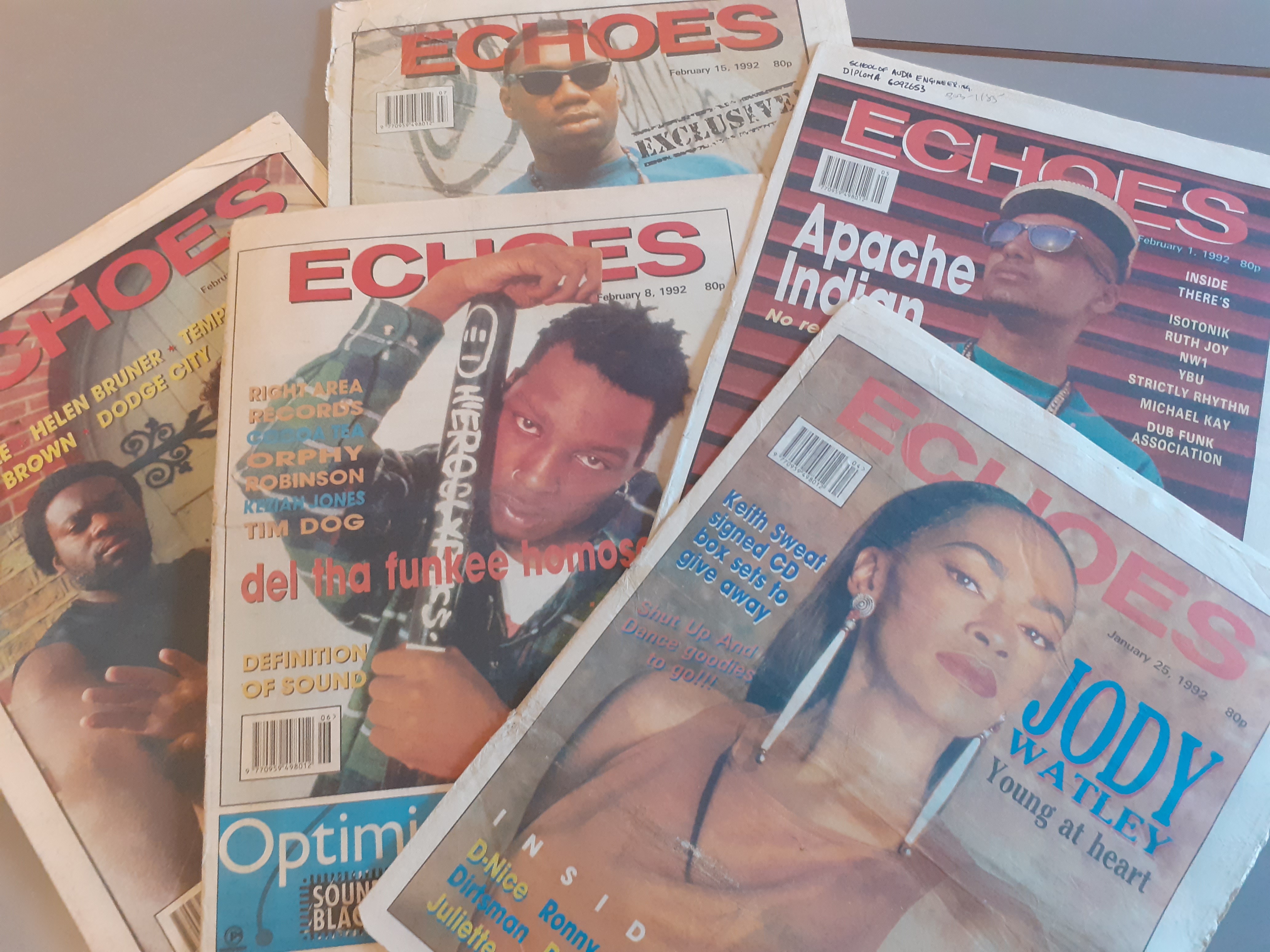
Having contributed to Echoes for almost thirty years I can testify to the unflagging commitment of its editorial staff to maintaining the highest possible standards of journalism all the while covering as wide a range of music as possible. Newer genres such as hip-hop are very important along with the ‘foundational’ styles of soul, funk, reggae and jazz. Echoes remains a publication that is open-minded but also rigorous in terms of critical appraisal of the artists it covers and feels a responsibility to readers that expect honest opinion and intelligent debate rather than any simple rehashing of promotional hype. As one would expect, Echoes has moved with the times and has a website (www.echoesmagazine.com) and global online presence but also keeps faith in its traditional format, knowing that dedicated readers still enjoy thumbing the pages of the magazine as much as they may click on a computer screen to read articles.
Given the fact they span a half-century of music coverage all issues of Black Echoes are invaluable documents for anybody with a serious or even passing interest in the countless artists who have recorded and toured, be they American, British or West Indian, in that time. As a journalist and author with a specific focus on black music I can say that Black Echoes has been a game-changing tool to me for the simple reason that it is part of my ongoing development. Every issue features artists known and unknown, reflecting the desire of the editor Chris Wells to ensure that the magazine is inclusive and comprehensive. The George Padmore Institute (GPI) is a vital resource centre for black culture and the copies of Black Echoes and Echoes in its archives capture timeless words, sounds and deeds.
The GPI's extensive collection of Black Echoes and Echoes from 1976 to 1999 can be searched here. To visit the GPI email info@georgepadmoreinstitute.org
.png)
Trustee Kevin Le Gendre is a journalist and broadcaster with a special interest in black music, literature and culture. Since the late 1990s he has written about soul, funk, jazz and hip-hop, as well as African and Caribbean authors for many publications, including Echoes, Jazzwise, the Guardian, The Independent and the Times Literary Supplement Online. He contributes to BBC Radio arts programmes and has presented several documentaries. His books include Hear My Train A Comin': The Songs of Jimi Hendrix and two volumes of Black Music in Britain: Don't Stop the Carnival and Children of the Ghetto.
.png)