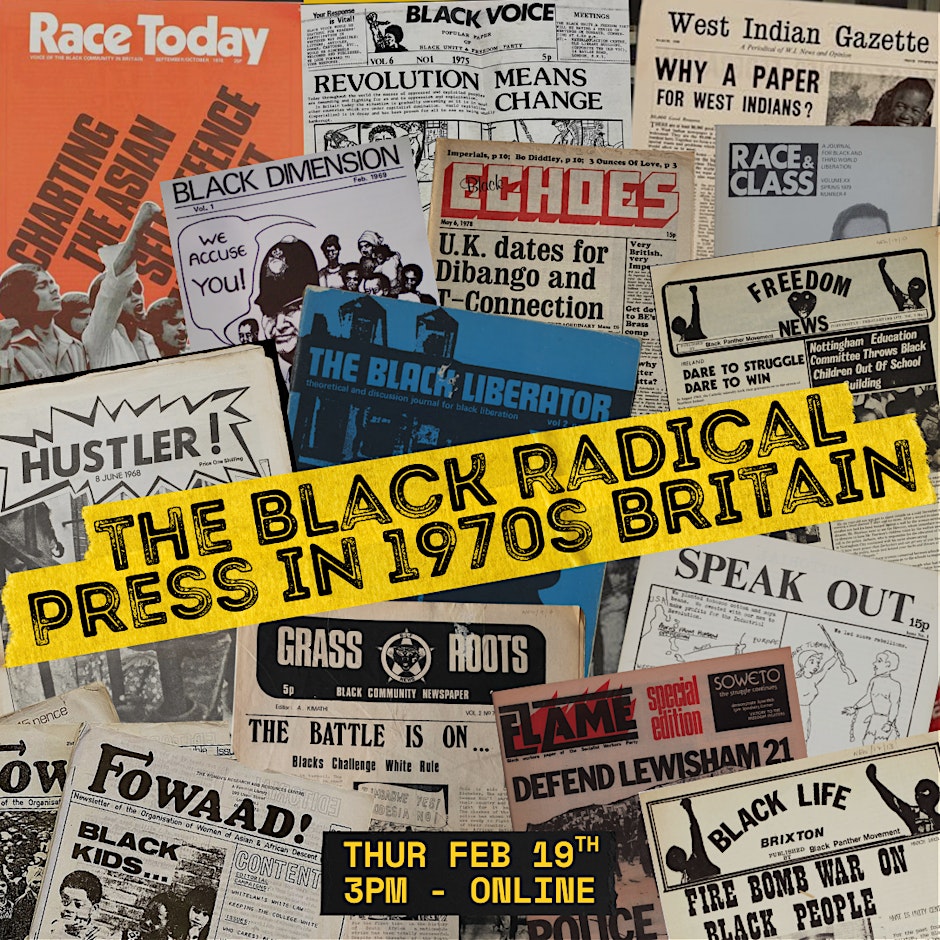
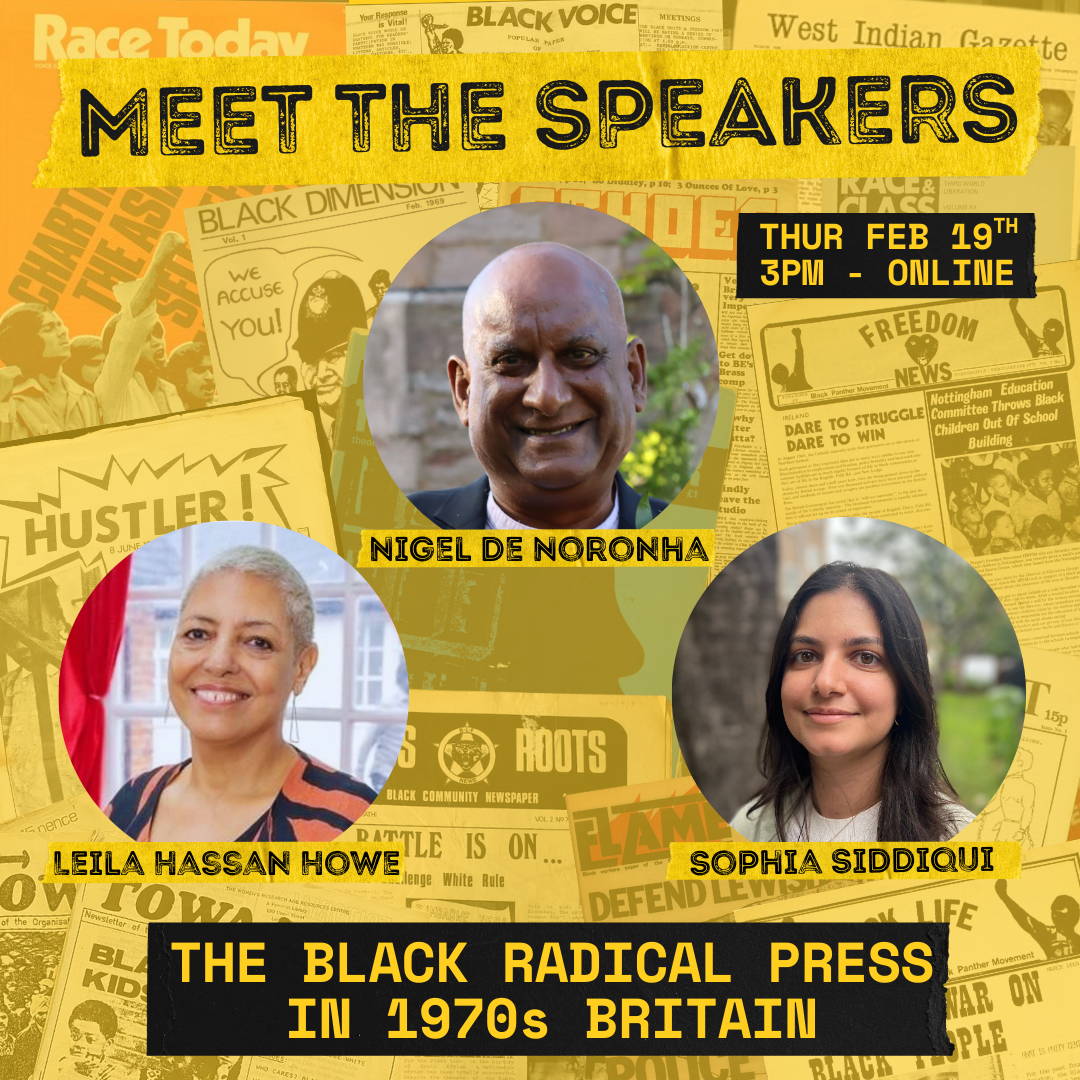
An online workshop on 19 February explored the materials and histories of Black activist publishing in the UK from the 1970s with speakers Leila Hassan Howe, Nigel De Noronha and Sophia Siddiqui, including the GPI's archivist Sarah Garrod. Chaired by Arielle Lawson.
Organized in collaboration with Arielle Lawson of People's Papers and co-sponsored by the Institute of Race Relations and the Centre for the Dynamics of Ethnicity, this event focused on the archival legacy and continued significance of the Black radical press — as made up of grassroots newspapers, political journals and other activist print publications — in 1970s Britain and what we can still learn from these materials today.
Bringing together speakers with related experience in the archives and first-hand experience of radical publishing, the aim of this event was to share how these materials highlight:
-- the breadth, variety and creativity of Black community organizing and activism, especially around often overlooked place-based projects and practices of everyday life;
-- an analysis of the time and the various issues and debates of the period from a Black (and often international) perspective;
-- the overlaps but also distinctiveness of these Black publications in comparison to other alternative and radical press materials from the time;
-- the role of these often more ephemeral publications within and as part of the larger Black radical tradition;
-- the continued significance and legacy of the 1970s Black radical press, the necessity of its preservation and its potential for further activation and research.
Leila Hassan Howe is a British editor, writer and anti-racism activist. A founding member of the Brixton-based Race Today Collective, Leila edited the Race Today magazine from 1985. The publication played a pivotal role in highlighting the issues faced by Black communities in the UK as well as race relations across the world from 1973 until its closure in 1988. In 2019, she co-edited ‘Here to Stay, Here to Fight’, a collection of writings from Race Today designed to bring Britain's radical Black politics to new audiences. She is now Chair of the Darcus Howe Legacy Collective.
Leila first became involved in the Black Power movement in the 1960s, when she became a member of the Black Unity and Freedom Party. She was closely involved in anti-racism struggles across the country, including supporting striking Asian women workers in Leicester in their campaign for fair pay, the campaign for decent housing by Bengalis in East London, numerous campaigns against police oppression and with Creation For Liberation - giving voice to the cultural and artistic movements of that era. She was part of the organising committee for the first Black People’s Day of Action in March 1981 in response to the deaths of thirteen young Black people in the New Cross Fire tragedy.
Nigel de Noronha is a researcher at the Centre for the Dynamics of Ethnicity (CoDE) at the University of Manchester. His main research focus is on housing, race and migration and he uses archival methods to explore the historical context of the persistent housing inequalities experienced by racialised minorities.
Sophia Siddiqui works at the Institute of Race Relations (IRR), an anti-racist charity working to inform the struggle for racial justice. She is the Joint Editor of the IRR’s international journal Race & Class and she writes on issues related to the far Right and community resistance.
.png)