The Life Cycle of Archives and Activism
By Suada Sed
I am a history undergraduate with a strong interest in archives, particularly in how they serve as a medium for passing knowledge from the past to the future. I wrote this piece after engaging for some months with the George Padmore Institute’s (GPI) collections and seeing parallels between the resolving of social issues and the tangible process of archiving. This was best observed in a community archive like the GPI where the cyclical nature of both the records and the means of processing them into the archive converged.
Provenance
‘What is past is prologue.’ – The Tempest, Shakespeare
Provenance is a term used to describe the origin and source of something, or more plainly, its past. Establishing provenance provides us with a foundation to work from when understanding the context of an item, whether contemporary or, if preserved, historic. This principle and subsequent practice are especially relevant within the field of record keeping and archives. Provenance is inextricably linked to the archival process. Both archives and records exist in a life cycle of sorts, as all archives begin as records but not all records ‘live’ long enough in the life cycle to end up as archives. However, with enough contemporary and, later, historic relevance, a record can be preserved and enter a sort of ‘afterlife’ as an archive.
Synergies
There is a direct relationship between activism and archives. The similar selection pressures that exist in the process of determining a record or social movement’s value mean that one can be activated by the other. It is from existing communal dialogue and discourse that a communal record is created. From that record, key talking points and issues are retained, engaged with, and subsequently preserved, much like archives are preserved from records. Because we select for importance when deciding which records to keep, archives maintain contemporary relevance, much like the social issues targeted by activism.
This synergistic relationship is especially evident with archives that are preserved and accessed within the community. The principle of a ‘life cycle’ underlying both archives and activism can be observed best in a community archive like the GPI. Established in 1991 by John La Rose and other political and cultural activists, the Institute captures and preserves the local Black British historical record from the 1960s onwards. Having volunteered at the GPI’s archive for a year, I have had a lot of time to think about the function of history and record keeping in both practical and abstract ways. Processing archives has taught me how individual items feed into a wider physical record and into the wider process of selecting materials of continuing relevance.
The collection I was most recently involved in cataloguing helped me understand the parallel between archives and activism in particular. Covering labour and social organising among Black British women from the 1970s to the 1990s, the assortment of materials focus on issues such as wages and workplace conditions. The format of these documents range from ephemera like protest fliers to articles in journals like Race Today.
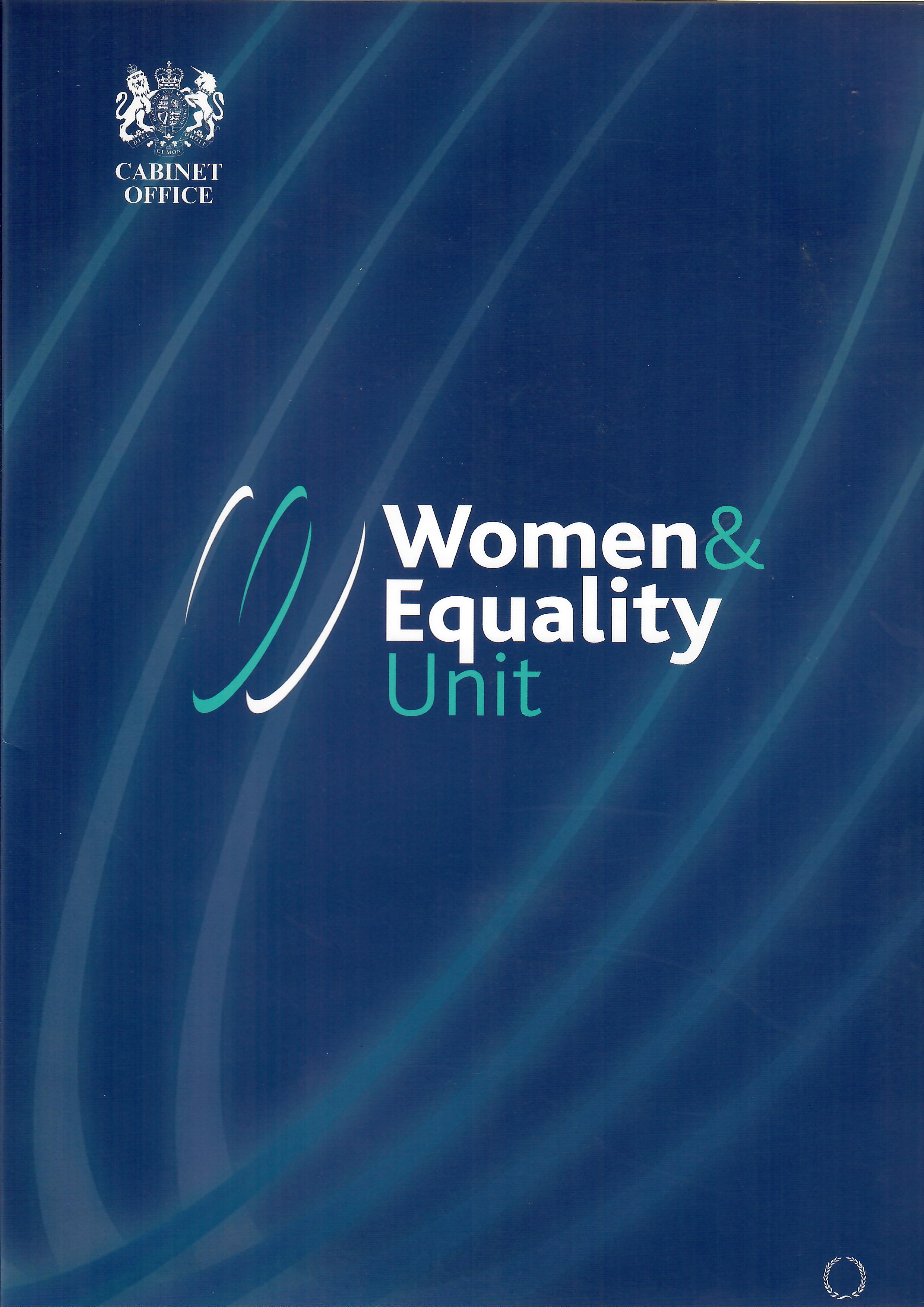
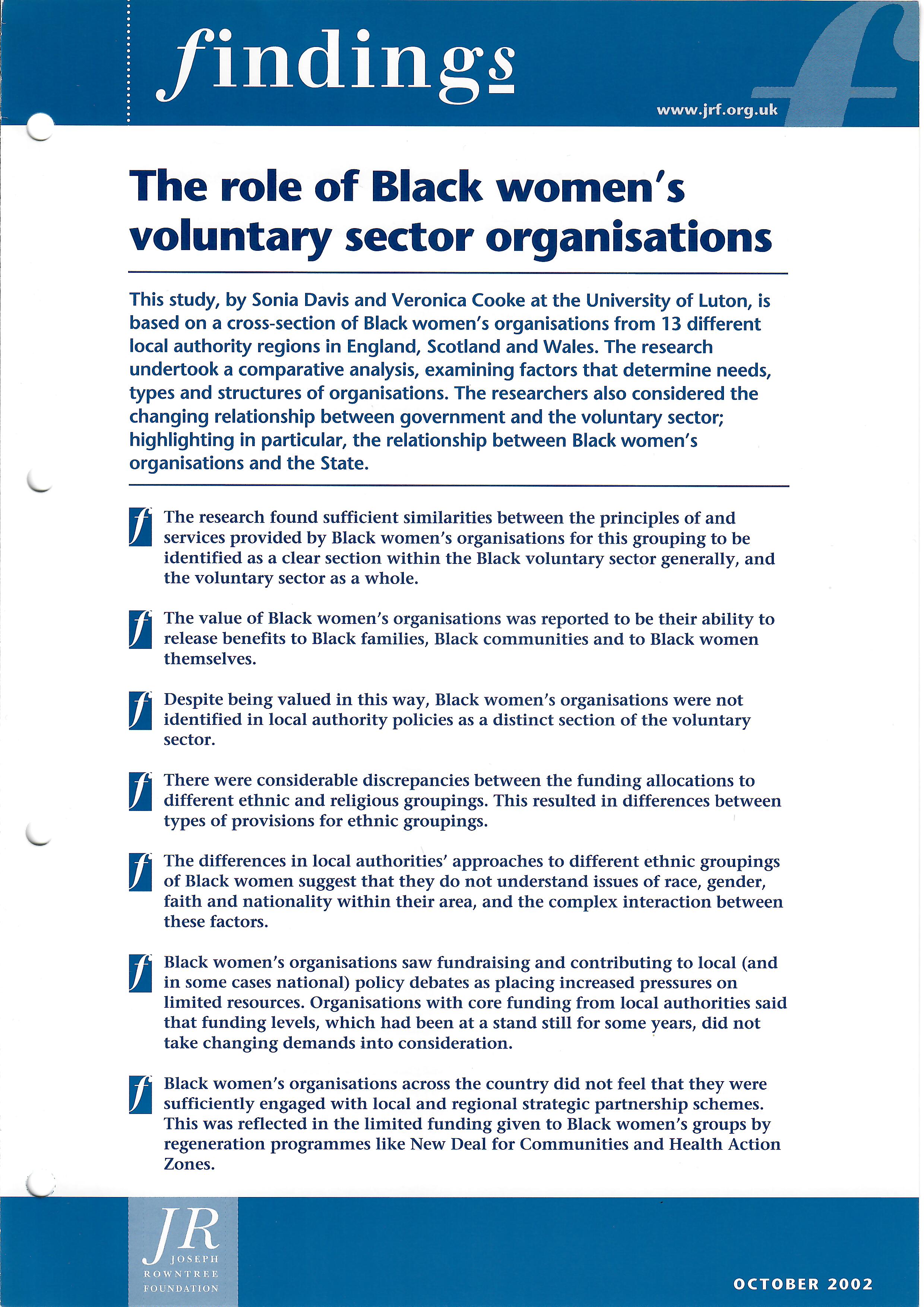
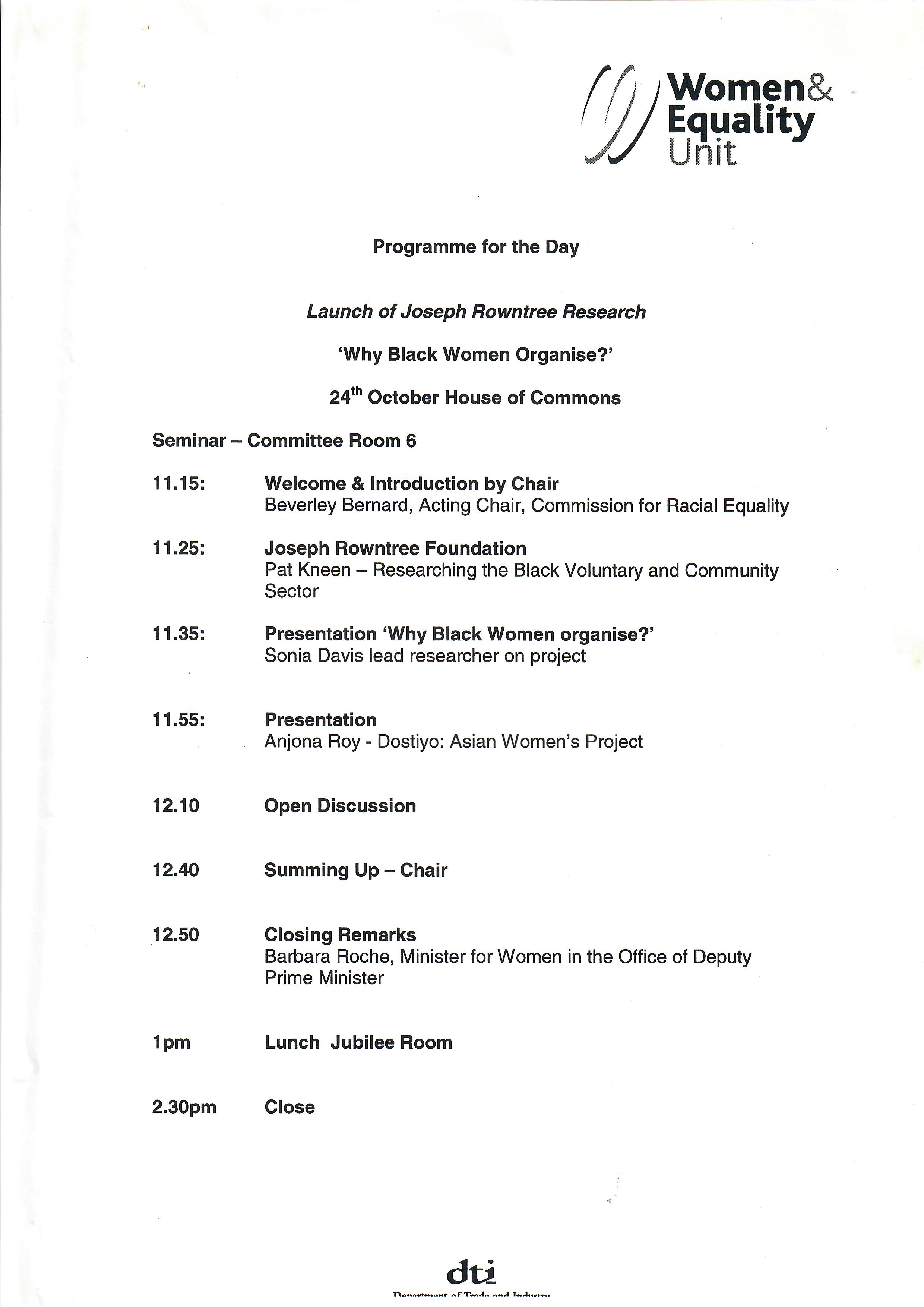
At the very end of the series, I found a presentation folder from 2002 issued by the Women and Equalities Unit, a still extant department in the Office for Equality and Opportunity. It consists of a research report and a programme for the presentation of said research.
The presentation folder provoked great interest in me, as its format was far more formal and institutional than the other materials in the collection I had catalogued. It covered the relevant topics associated with the previous posters and articles but was something that could only exist as a result of consistent community activism to highlight gaps in government policy.
Completing the Life Cycle
The life cycle of activism, from the emergence of communal issues such as working conditions and wages to the organising of protests and the writing of articles, to its ultimate or partial resolution via institutional means, can itself be best witnessed through the life cycle of archives. I was able to observe from processing the archive collection how completing the life cycle of organising to resolve social issues converged with the life cycle of preserving the materials.
It is archives like the GPI which focus on such local social histories that the record of past communal actions and goals can be retained and possibly highlight the issues within that record of activism that have remained unresolved. Additionally, with the Institute’s current community engagement, not only the historic value but any contemporary social and activist relevance that led to these files’ retention and preservation can be perpetuated.
.png)